Aluminum profiles are the backbone of modern windows and doors. In Saudi Arabia, where high temperatures and dust are constant challenges, choosing the right aluminum profile is critical for both durability and performance.
Whether you’re a fabricator, contractor, or homeowner, understanding these profiles can help you make informed decisions for residential, commercial, or industrial projects.
1. Series 100 (Sliding System)
The Series 100 Sliding System is one of the most commonly used aluminum framing systems in Saudi Arabia for sliding windows and doors, especially in residential and mid-range commercial projects. It’s known for its simplicity, durability, and affordability.
Key Features of Series 100 Sliding System:
1. Slim Profile Design
– Provides a clean and minimal aesthetic.
– Allows for larger glass panels to maximize natural light.
2. Single or Double Track Options
– Can be configured for 2-panel or 4-panel sliding windows/doors.
– Double-track is commonly used for better flexibility and airflow.
3. Glazing Options
– Typically supports 5mm to 8mm glass thickness (clear, tinted, or frosted).
– Can be adapted for single or double glazing (with limitations).
4. Smooth Sliding Mechanism
– Equipped with rollers/bearings for easy operation.
– Bottom-track design for stability and smooth movement.
5. Locking Mechanism
– Can be fitted with simple latches or multi-point locks for added security.
6. Weather Resistance
– Includes basic weather stripping for dust and water resistance.
– Suitable for moderate to warm climates like in the Gulf.
7. Frame Depth
– Usually has a depth of 45mm to 55mm, making it ideal for small to mid-sized window/door openings.
8. Customizability
– Available in various finishes: powder-coated, anodized, or wood grain.
– Compatible with fly screens and grills.
Features:
– Ideal for sliding windows and doors
– Space-saving
– Basic weather sealing
– Economical
Common Applications:
– Residential balconies
– Villa windows
– Internal partitions
– Kitchen windows
– Storefronts (small scale)
2. Series 200 / Heavy duty sliding system
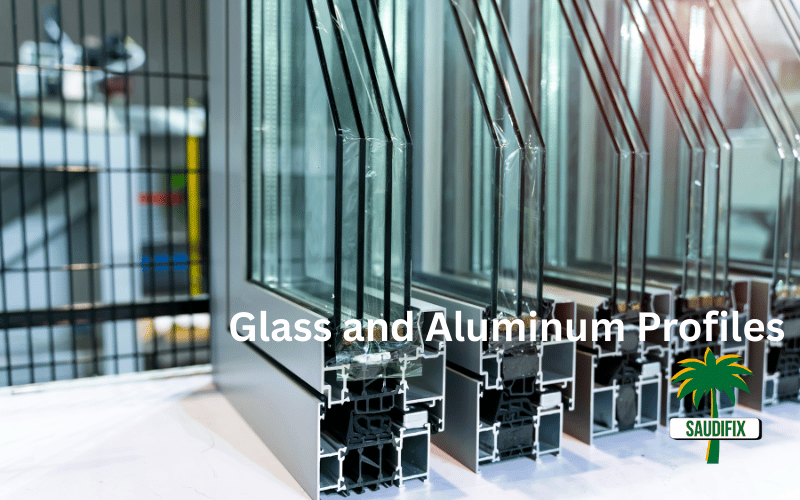
The Series 200 Sliding System is a heavy-duty aluminum profile system widely used in commercial buildings, luxury villas, and large-scale openings in Saudi Arabia. It’s designed to handle larger, heavier glass panels while offering excellent durability, weather resistance, and smooth operation.
Key Features of Series 200 Sliding System:
1. Heavy-Duty Frame & Profile Thickness
– Frame depth ranges from 80mm to 100mm or more.
– Designed to support large and heavy glass panels (up to 12mm+ thickness or double-glazed).
– Thicker walls and reinforcements compared to Series 100.
2. Double or Triple Track Configurations
– Supports multiple sliding panels (2, 3, or 4 tracks).
3. Glazing Options
– Supports double or laminated glass.
– Can accommodate 6mm to 24mm glass depending on the configuration.
4. Enhanced Security Options
– Compatible with multi-point locking systems.
– Stronger interlocks between panels for improved security and resistance to forced entry.
5. Custom Finishes
– Available in powder-coated, anodized, and woodgrain finishes.
– Color matching possible for architectural coordination.
Applications of Series 200:
– Hotel balconies and facades
– Luxury villa sliding doors
– Commercial buildings & malls
Need Help Choosing the Right Aluminum Profile?
Whether you’re planning a home renovation or working on a commercial project in Dammam or anywhere in Saudi Arabia, SaudiFix connects you with trusted local experts and suppliers.
Get a free quote, consultation, or schedule a site visit today!Contact us on WhatsApp or Request a Quote now.
Stay updated — bookmark Saudifix.com for more glass & aluminum tips, comparisons, and trusted services.
3. Casement (Hinged) Profile Series – Aluminum Window & Door Systems
The Casement or Hinged Profile Series is a widely used aluminum profile system in Saudi Arabia for both windows and doors. These systems are preferred in residential villas, commercial buildings, and institutions due to their tight sealing, durability, and versatility in design.
Key Features of Casement (Hinged) Systems:
1. Inward & Outward Opening Options
– Windows and doors can open inward or outward, based on space and ventilation needs.
– Common in kitchens, bathrooms, and bedrooms for easy air flow and cleaning.
2. Strong Frame & Sash Profiles
– Profile thickness ranges from 1.4mm to 2.0mm.
– Can carry single or double-glazed glass.
– Frames usually have depths of 45mm to 70mm depending on the series and application.
3. Excellent Air and Water Tightness
– Rubber gaskets, EPDM seals, and multi-point locking provide tight insulation.
– Ideal for dusty and hot climates like Saudi Arabia.
– Minimizes air leakage and enhances energy efficiency.
4. Thermal and Acoustic Insulation
– Can use thermal break profiles for heat insulation.
– Option for double glazing to reduce sound transmission in noisy urban areas.
5. Multiple Configurations
– Top-hung, side-hung, bottom-hung (hopper) styles available.
– Can be used for doors, French windows, and ventilation windows.
6. Hardware Compatibility
– Supports heavy-duty hinges, friction stays, and multi-point locks.
– Durable handles and locking mechanisms for security.
7. Design Flexibility
– Available in standard powder coat, anodized, and wood grain finishes.
– Wide choice of colors to match exterior/interior design.
Applications of Casement (Hinged) Profiles:
– Residential windows and doors (villas, apartments)
– Commercial office windows
– Hospital and school ventilation windows
– Hotels and resorts (bathroom and corridor windows)
– Emergency escape windows (fire-rated versions)
Benefits:
– Maximized ventilation due to full sash opening
– Secure closing system for added safety
– Customizable sizes for any opening
– Low maintenance, corrosion-resistant
4. Thermal Break Aluminum Profiles
What is a Thermal Break?
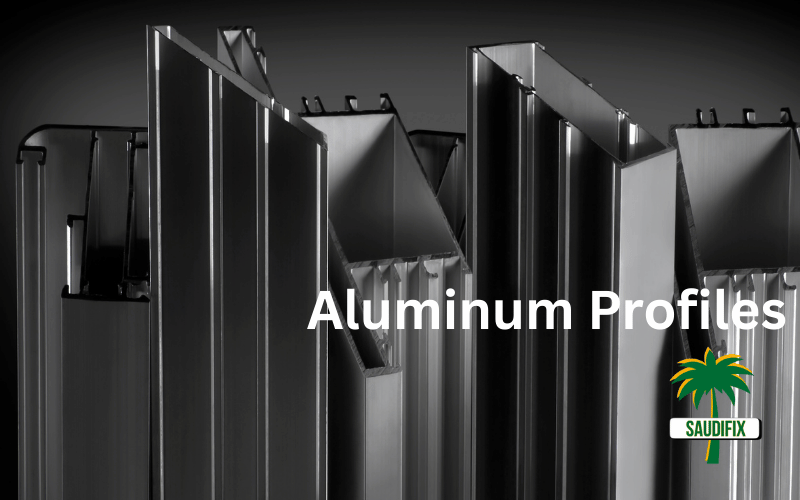
A thermal break in aluminum profiles is a non-metallic barrier (usually made of polyamide or polyurethane) inserted between the *inner and outer aluminum frames*. This barrier prevents heat and cold from transferring directly through the metal, making windows and doors more energy-efficient and comfortable, especially in extreme climates like Saudi Arabia.
Why Use Thermal Break Profiles?
Aluminum is naturally a good conductor of heat and cold. Without a thermal break, outside temperatures can pass easily through the frame, causing:
– Hot interiors in summer
– Cold interiors in winter
– Condensation* around the frames
– Higher air conditioning costs
By inserting a thermal insulator, the flow of heat is broken — reducing energy transfer, improving indoor comfort, and saving electricity.
Key Features:
1. Energy Efficiency
– Cuts down heat/cold transfer by *up to 60%* compared to standard aluminum.
– Helps maintain a stable indoor temperature.
– Greatly reduces the load on AC systems.
2. Sound Insulation
– Thermal break also provides better acoustic insulation.
– Helps block outside noise in busy urban or roadside areas.
3. Moisture Control
– Minimizes condensation on interior surfaces.
– Reduces mold and frame damage.
4. Durability & Strength
– Despite the added insulation layer, thermal break profiles remain *structurally strong*.
– Suitable for heavy glass and large panels.
5. Custom Finishes
– Allows dual-color systems — different finishes on inside and outside.
– Popular choice for *modern architectural designs*.
Applications in Saudi Arabia:
– Luxury villas and smart homes
– High-end commercial buildings
– Hospitals and clean rooms
– Energy-efficient government projects
How It’s Made:
1. Two separate aluminum sections are extruded.
2. A polyamide strip (or other insulating material) is inserted between them.
3. The parts are crimped together to form one solid profile.
This structure ensures the frame behaves as a single unit while breaking thermal conductivity.
Cost vs Benefit:
– Thermal break systems cost *more than standard profiles* but offer long-term savings.
– Ideal for projects where *energy savings and comfort* are priorities.
5. Curtain Wall Systems
A curtain wall system is a non-load-bearing exterior wall cladding made of lightweight materials like aluminum frames and glass. It’s designed to protect buildings from the weather while providing a modern, sleek appearance — commonly used in commercial buildings, towers, malls, and corporate offices.
What Is a Curtain Wall System?
– Unlike traditional walls, curtain walls don’t carry the building’s structural load.
– They are attached to the structural frame, hanging like a “curtain” — hence the name.
– Curtain walls are made of aluminum profiles and glass panels, often reaching floor-to-floor height.
Key Components:
1. Aluminum Frames
– Form the grid structure.
– Provide strength and hold the glass securely.
2. Glass Panels
– Can be clear, tinted, reflective, or double-glazed.
– Optional for thermal or sound insulation.
3. Pressure Plates & Gaskets
– Seal the panels against air and water leaks.
4. Spandrel Panels
– Used to hide structural elements or floors between vision glass areas.
Types of Curtain Wall Systems:
1. Stick System
– Assembled on-site piece by piece.
– Common for low- to mid-rise buildings.
– Lower material cost, but more labor-intensive.
2. Unitized System
– Pre-fabricated in the factory as large panels.
– Quicker to install on-site.
– Better for high-rise buildings and projects with tight timelines.
Advantages of Curtain Wall Systems:
– Modern Aesthetics
– Creates a clean, continuous glass façade.
– Ideal for high-end architecture and commercial branding.
“Looking for Glass or Aluminum Services? Get Connected with Trusted Professionals.”
– Natural Light
– Maximizes daylight inside the building.
– Reduces dependency on artificial lighting.
– Thermal Efficiency
– Can be fitted with double-glazing and thermal breaks for insulation.
– Reduces heating and cooling costs.
– Weather Protection
– Acts as a shield against wind, rain, and dust — important in Saudi Arabia’s harsh climate.
– Sound Insulation
– Reduces external noise, especially near roads or busy areas.
– Durability
– Aluminum doesn’t rust; glass and sealants can last for decades with proper maintenance.
Applications in Saudi Arabia:
– Office buildings and towers in Riyadh, Jeddah, and Dammam
– Shopping malls and commercial centers
– Government and institutional buildings
– Luxury hotels and airports
Challenges & Considerations:
– Initial Cost is higher than regular wall systems.
– Proper installation is critical — poor sealing leads to leaks.
– Thermal performance must be considered to meet energy-saving goals.
Conclusion
Understanding these top aluminum profiles in Saudi Arabia helps you choose the right system for functionality, aesthetics, and climate. The right profile will not only last longer but also increase the comfort and value of any space.
Aluminum profiles vary by application and performance — from simple sliding systems to advanced curtain walls.
Choosing the right profile helps with weather resistance, insulation, security, and aesthetics in both residential and commercial buildings.
Profiles like thermal break systems offer long‑term energy savings and comfort, while heavy‑duty sliding systems suit large openings with heavier glass loads.